
Equipping people with tools to better understand EU environmental law
The Charter of Fundamental Rights of the European Union guarantees rights related to the environment. In practice, these rights are rarely enforced. People, NGOs and activists who want to defend them often don’t know how. Those who speak up may also face intimidation, including Strategic Lawsuits Against Public Participation (SLAPPs).
JUSTGREEN gives citizens, organisations and legal professionals the knowledge and practical tools they need to defend their environmental rights.
Main activities
1. Training programme with two tracks:
-
for community members and activists: what environmental rights the EU Charter gives them;
-
for lawyers and other professionals: how to support people who need advice on environmental law.
2. JUSTGREEN Digital Hub, which includes:
-
information on environment-related rights;
-
an AI-assisted tool that helps users check whether their situation may involve a rights violation;
-
secure case submission;
-
a legal helpdesk staffed by people, offering individual advice and, where needed, help preparing strategic litigation.
3. JUSTGREEN Network, which connects environmental justice organisations (NGOs, legal clinics, universities, bar associations) with people who need advice.
Partners
-
Centre for European Constitutional Law (Greece), Coordinator
-
Cosvitec EST (Romania)
-
ProRights (Italy)
-
Develop Athens S.A. (Greece)
-
Center for the Study of Democracy (Bulgaria)
-
Society and Security Foundation (Bulgaria)
-
Central and Eastern European Sustainable Energy Network, CEESEN (Estonia)
-
Nova Univerza, Faculty of Government and European Studies (Slovenia)
Project information
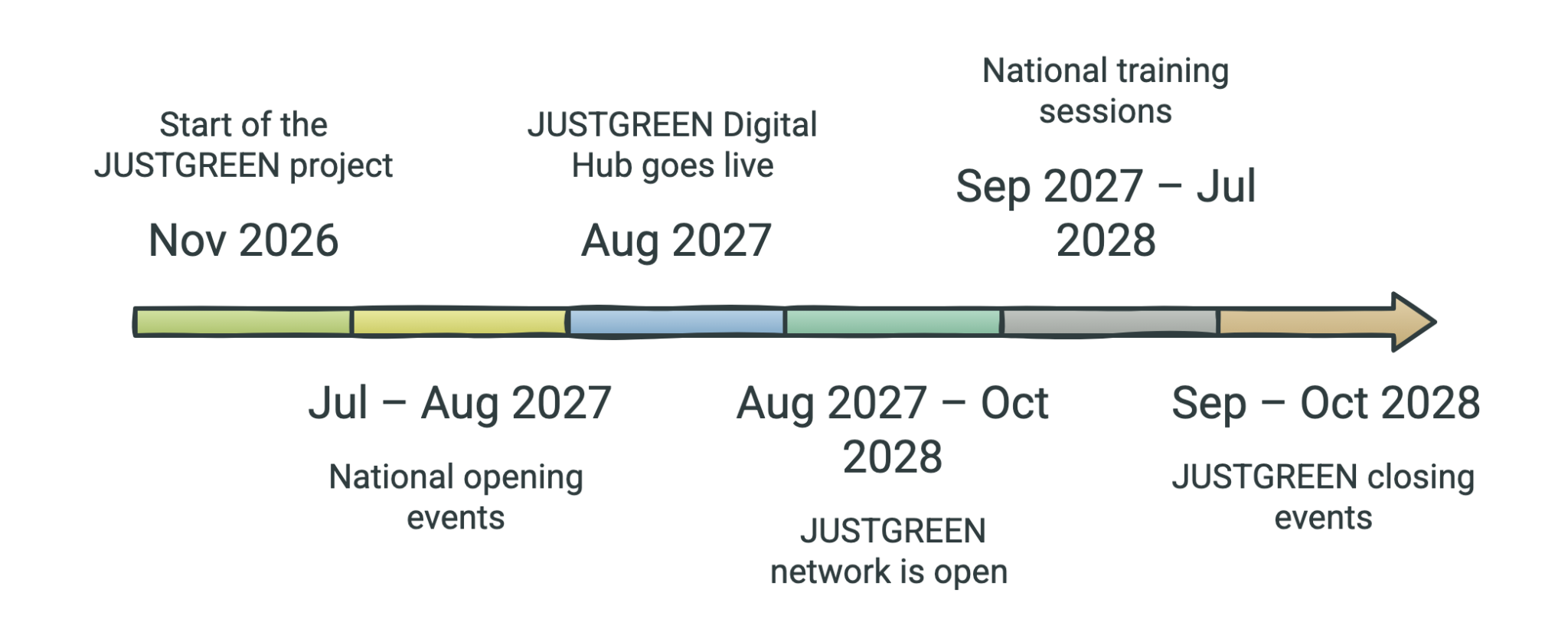
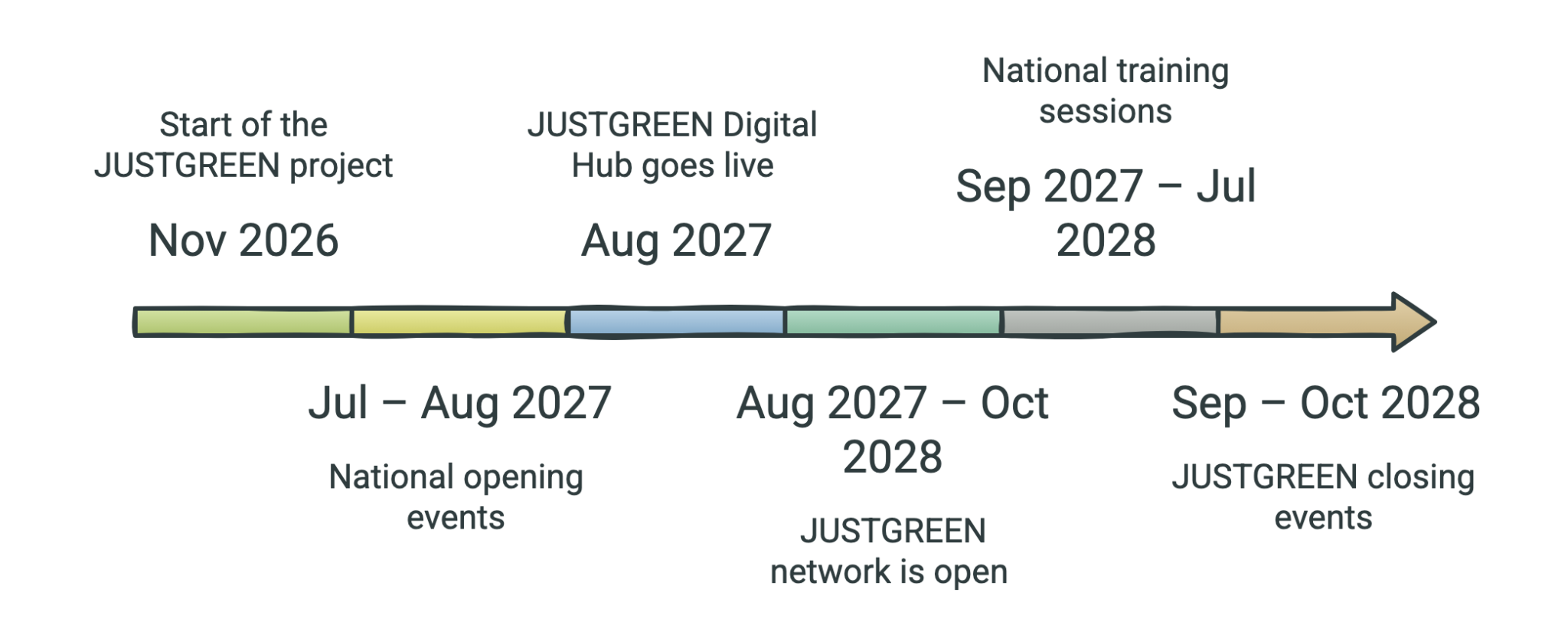
- Duration: November 2026 – October 2028 (24 months)
- Total budget: EUR 540,439.88
- EU contribution: EUR 486,395.90 (90%)
- Programme: Citizens, Equality, Rights and Values Programme (CERV), Grant Agreement No. 101292737

Funded by the European Union. Views and opinions expressed are however those of the author(s) only and do not necessarily reflect those of the European Union or the European Education and Culture Executive Agency (EACEA). Neither the European Union nor the granting authority can be held responsible for them.